Researchers have developed an innovative method for installing millions of human brain cells in mice to create better scientific models for studying neurological diseases. This study is particularly significant in the field of research related to advanced brain diseases.
Development of Research Models
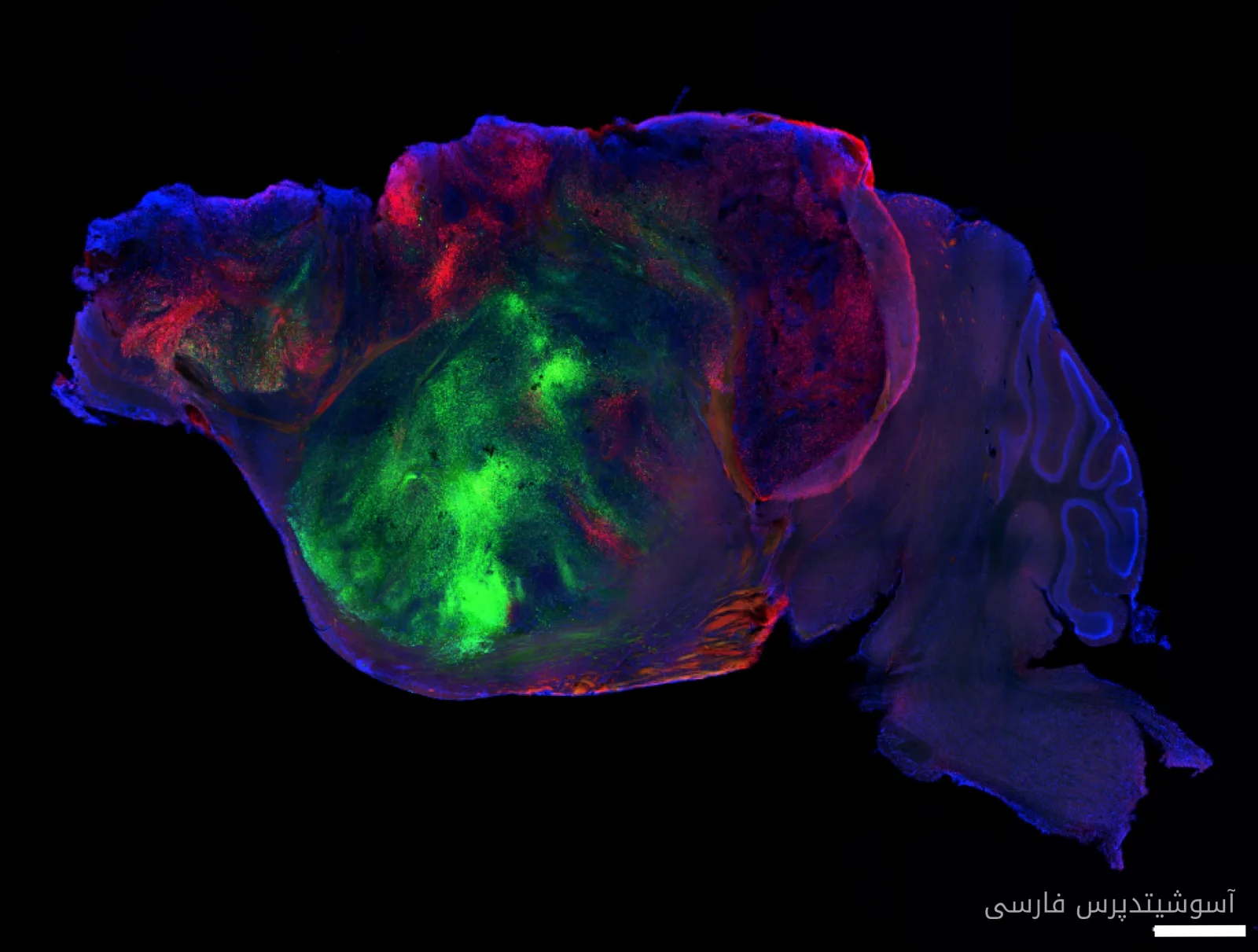
Using genetic tools, researchers bred mice that had lost most of their cerebral cortex, the outer layer of the brain responsible for thinking, memory, and awareness. Then, a large portion of these mouse brain cells was replaced with human brain cells that had been grown in the laboratory. This resulted in mice with human neurons that can create changes to simulate human brain conditions.
Read more: New research examines fatigue in Americans
Sergiu Pașca, a professor of psychiatry and behavioral sciences at Stanford University and the senior author of the article published in Nature, said, "For the past two decades, efforts to create human brain models outside the human body have continued. This method gives us access to other aspects of human brain function that are difficult to study."
Ethical and Scientific Challenges
This research has been conducted under strong ethical oversight, but independent researchers believe that this development raises important questions about its potential implications. Hongkui Zeng, executive vice president and director of brain sciences at the Allen Institute in Seattle, said, "This is a powerful technology for studying human neurons and how human brain circuits are formed in a more natural environment, which has advantages over laboratory environments like petri dishes."
However, Zeng added that in the future, attention must be paid to some considerations and concerns, especially regarding the use of this technique in larger and longer-lived animals.
This is not the first time human brain cells have been installed in mice, but the new effort has managed to connect significantly more human cells than previous attempts.
Function of Modified Mice
Previously, efforts had been limited by the persistent biological reality: human brain cells grow at least 20 times slower than mouse brain cells. This means that the neurons of a growing mouse quickly form a network and overshadow the human cells added to it.
The research team addressed this challenge by breeding genetically engineered mice that had specific parts of their brains removed. Pașca said, "We thought we could give human cells more opportunities to connect by precisely and simply removing parts of the mouse nervous system." To their surprise, the mice they bred still performed well.
These mice did not perform well on memory tasks, but were nearly good in terms of motor skills. Pașca said, "You can't tell that these animals are missing half of their brain volume."
This part of the experiment demonstrates the remarkable adaptability of developing brains. Animals that have lost their cerebral cortex are not expected to perform well on challenging tasks, but these mice have developed alternative strategies using the remaining parts of their brains.
Final Results and Future Outlook
The research team is also optimistic that this research can contribute to the development of treatments and answer questions related to brain diseases. Pașca said, "I hope this work will be very effective for studying diseases and developing treatments."
However, researchers emphasize that this is not a complete brain link. In this experiment, they removed about 14 million mouse neurons and added about 4 million human cortical neurons. The resulting mice still lack significant types of brain cells and their human neurons do not form a typical cerebral cortex.
Read more: Unprecedented pressure on NHS; heatstroke floods hospitals · Will artificial intelligence be a threat to humanity?
Source: npr.org