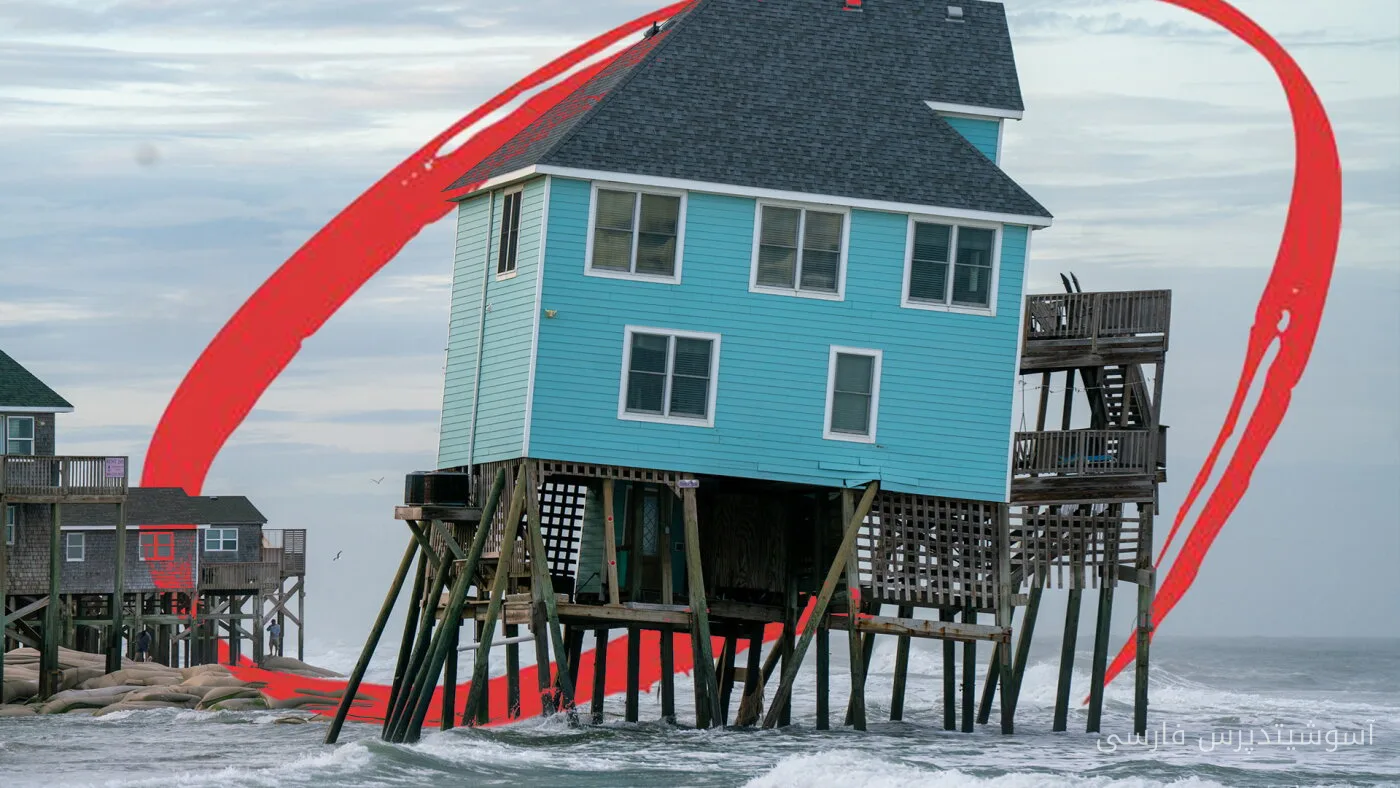
Richard Foreman's house is surrounded by the coast. The entry steps were washed away by sea waves years ago, and now there is no way to enter or exit. This house is 20 feet above sea level and was built on stilts designed to protect against storms. However, there have not been significant storms in recent years, and the sea is gradually swallowing the shores.
Increased Erosion and Climate Change Risks
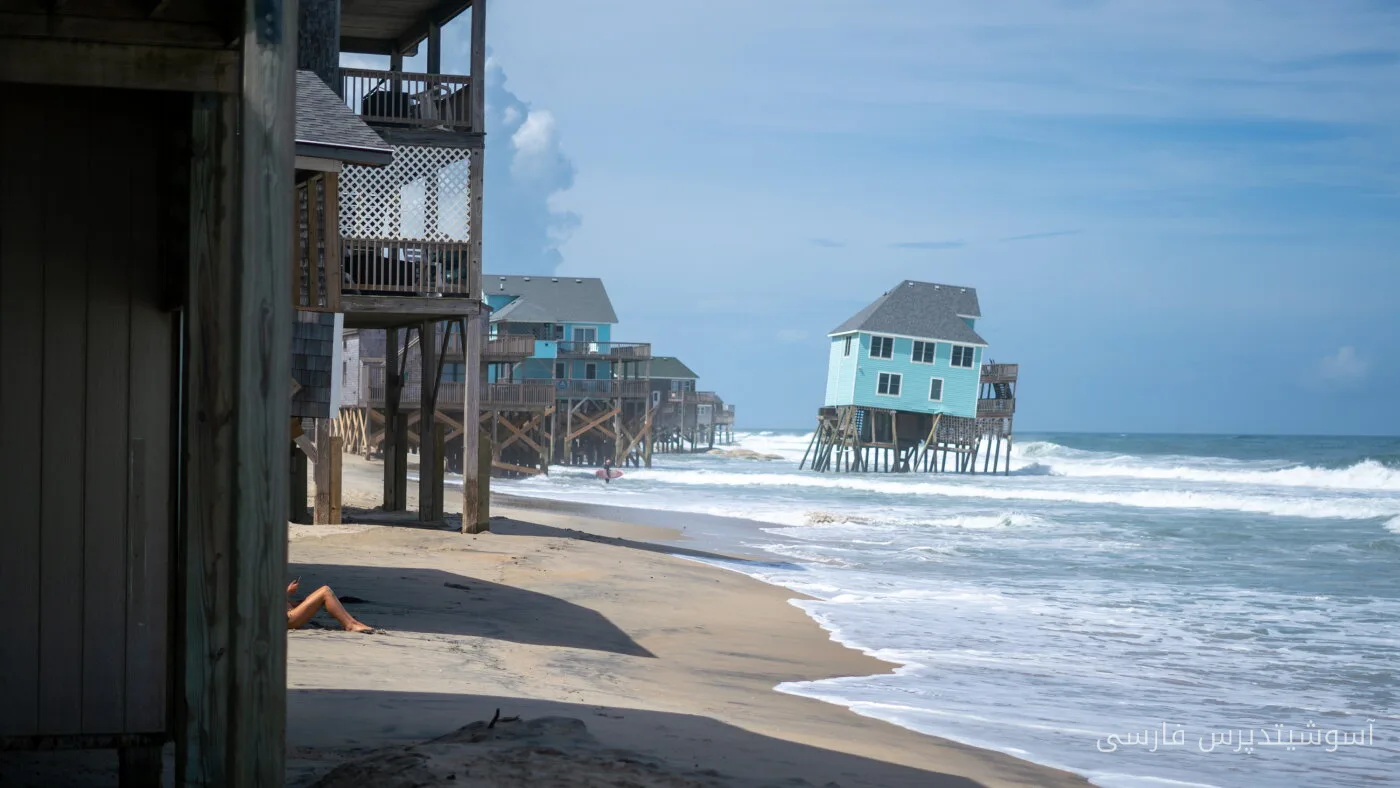
Just six years ago, this house in Rodanthe, North Carolina, was a popular vacation rental. However, today its name has faded, and this house has become uninhabitable. At low tide, the Atlantic Ocean reaches where the driveway once was, and at high tide, the sea flows beneath the entire house.
Read more: The Battle to Save the Sticky Snail of the Only Lake in Wales
Coastal homes are falling due to erosion. This erosion has been exacerbated by rising sea levels due to climate change. Since 2020, more than 30 homes in Dare County have fallen.
Lack of Support Programs and Encouragement to Wait for Collapse
Foreman knows that his house will eventually fall. In the past two years, four neighboring houses have fallen into the sea, and more than 100 homes on North Carolina's barrier islands are at risk. At least six of these homes are in immediate danger. In June, a high tide combined with large waves caused another house to collapse.
However, there are no plans for the evacuation or demolition of most at-risk homes, as the bizarre regulations of the Federal Emergency Management Agency (FEMA) have prevented this. This agency primarily provides flood insurance for residential properties in the United States and compensates owners only after homes collapse, not before. As a result, owners are inclined to wait for their homes to fall to receive insurance payouts, fearing loss of their investment.
John Ryan-Henry, a policy analyst at the Coastal States Organization, says, "Owners are naturally encouraged to wait for the collapse and then collect compensation." And when homes collapse, they leave pollution in the water and debris on the shores.
In the past 18 months, the National Park Service has collected over 480 tons of household waste from the area.
With the acceleration of rising sea levels and erosion along the U.S. coasts, concerns are growing among coastal homeowners, local officials, and even members of Congress. Foreman says, "If they settle with me for insurance, I will demolish the house tomorrow."
The FEMA director states that the agency cannot change the regulations regarding at-risk properties unless Congress amends the National Flood Insurance Program laws. Such a bill was introduced in 2025 by a bipartisan group of lawmakers but has stalled in the House of Representatives.
Erosion is an unavoidable problem for coastal communities, and climate change is disproportionately accelerating this erosion. In North Carolina, where thousands of homes are located on narrow barrier islands, sea levels are rising faster than the global average.
Read more: Greg Stanton Introduced Mining in Congo for the Benefit of Deforestation · Cultural Climate Wars: A Threat to the Global Economy
Source: npr.org