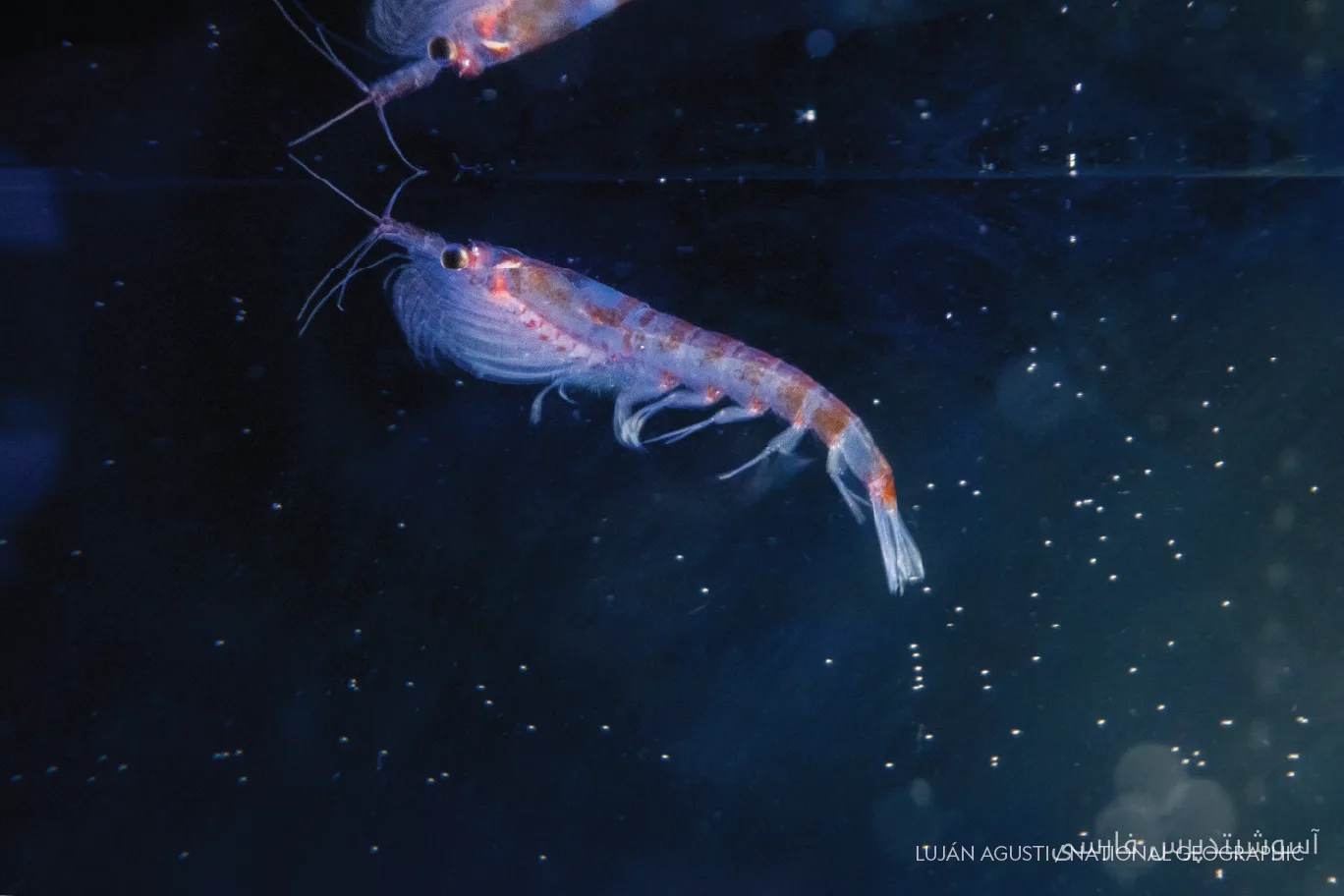
Antarctic krill, a type of crustacean similar to shrimp and playing a crucial role in the Antarctic food chain, were discovered in a hydrothermal vent near the Antarctic Peninsula. This discovery was made during a joint international research expedition aimed at studying the Southern Ocean ecosystems.
The Key Role of Krill in the Ecosystem
Krill are a vital food source for penguins, seals, and whales. Kim Bernard, a biological oceanographer from Oregon State University and National Geographic explorer, stated: "Most of these animals feed on Antarctic krill, and if they cannot feed on krill, they turn to something else that directly feeds on krill. Therefore, they are fundamentally essential for the functioning and health of this ecosystem."
Read more: Honey Spots: Luke Jaram's Art Installation by the Thames Gives Life to Insects
Krill also recycle nutrients that help the growth of small algae known as phytoplankton. Additionally, krill are harvested in large quantities to be used for aquaculture feed and omega-3 fatty acids as dietary supplements.
Changes Due to Climate Change
However, experts warn that this rich habitat in the Southern Ocean is rapidly changing due to climate change. Bernard said: "This area is one of the fastest-warming regions on the planet, and these changes are affecting the population of Antarctic krill."
In 2024, Bernard and his colleagues reported in the journal Communications Biology the discovery of an unexpected habitat for krill - hydrothermal vents. Identifying the importance of this habitat, especially for fertile females, could aid in the conservation of these vital crustaceans.
Krill are typically found in the upper layers of the ocean. Bernard explained that these creatures can gather in groups and layers at the water's surface and can even be photographed from airplanes. However, deeper observations from the seafloor have been very limited and experimental.
During the expedition to the Bransfield Strait, Bernard noticed movement in a corner of the screen. The movement was clearly a krill. He said: "It was like a fin underwater, it seemed to be spinning. I quickly ran to the control room and shouted, 'There’s a krill, there’s a krill!'" This was the first time krill had been observed in a hydrothermal vent.
Another research team intended to study the geology and microbiology of this vent, but Bernard was allowed 15 minutes to collect some samples. He explained: "They have a device called a suction sampler which is basically a vacuum that sucks up anything you want." The team successfully collected four female krill, which were heavily laden with eggs.
Further Research on Krill
Bernard and his colleagues are now seeking to understand why krill exist at this depth. He said: "It is very important that we focus our efforts on understanding the role of the deep environment in the lives of fertile krill." Krill at ocean depths face many hazards, including toxic heavy metals like cadmium and lead. Therefore, anything that attracts them to the hydrothermal vent must be valuable.
Bernard, by examining the stomach contents of krill collected from the vent and other shallower areas, found that they are clearly feeding on the microbes present there. He also explained that these nutrients may be available year-round, while phytoplankton depend on sunlight and photosynthesis.
Ultimately, this discovery could enhance the understanding of marine ecosystems and the role of krill within them, as well as provide new ways to protect these species.
Read more: National Warning: Endangered Species in Eriri National Park · Global Warming: 30 Percent Negative Impact of Climate Feedbacks on the Future of Earth
Source: npr.org