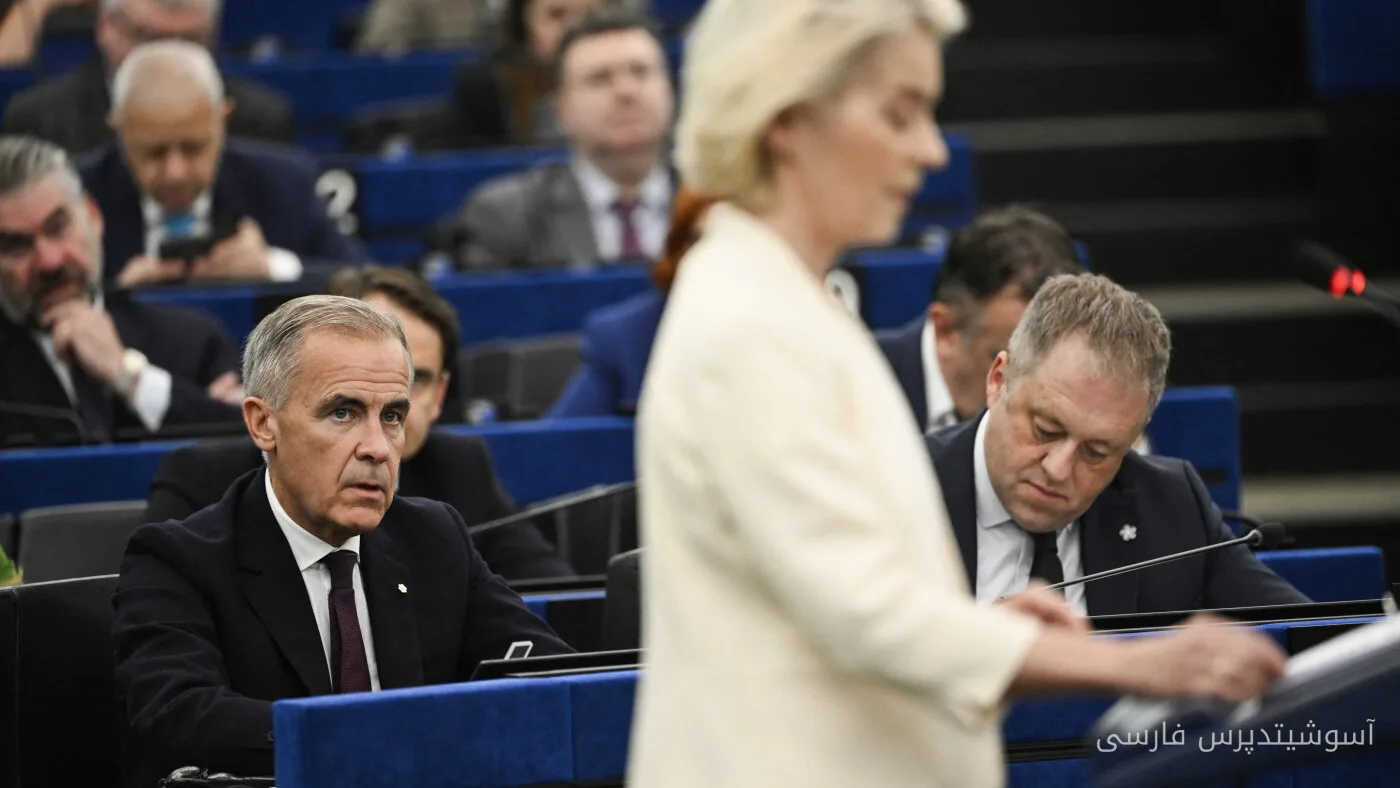
The European Union proposes that Canada become the first 'associate member' of the union, a model that currently does not exist. This proposal was made during the annual speech of Ursula von der Leyen, President of the European Commission, in the European Parliament, while Mark Carney, the Prime Minister of Canada, was present as a special guest.
Emphasis on Democratic Cooperation
Von der Leyen stated in her speech: "Dear Mark, Europe and Canada believe in democracy, that power does not belong to the strongest, richest, and loudest, but to all of us." She then added: "I want to work with you to open the door for Canada to become the first associate member of the European Union."
Read more: JD Vance in an effort to help Hillary Clinton in the 2016 election
This announcement prompted applause and standing ovations from representatives and officials in Parliament, and von der Leyen and Carney kissed each other on the cheeks. This moment comes as the European Union and Canada are working to strengthen their partnership amid difficult relations with Washington under President Donald Trump.
Challenges of Associate Membership
Von der Leyen emphasized that this proposed relationship is "not against anyone," but the clarification of this point reflects the context in which this proposal is made. For many Europeans, Carney has become a prominent voice for closer cooperation among U.S. partner countries. He warned at the World Economic Forum in January that "great powers have recently begun using economic integration as a weapon, tariffs as leverage, and supply chains as vulnerabilities to exploit."
Carney has clearly stated that Canada does not want to fully integrate with the EU single market. Canada and the European Union already have a free trade agreement, although Carney expects to pressure the 10 EU countries that have not yet ratified it.
This proposal has been presented without thorough public negotiation, raising questions within the EU about how this announcement was formed. In the European Parliament, no one has opposed the idea of associate membership, but reports indicate that some EU governments are angry about the lack of consultation prior to the proposal, suggesting there may be more resistance in EU capitals where broad support for any new partnership is necessary.
This proposal has also raised political questions in Canada, particularly about what associate membership means and what closer ties with the EU might require from Canada. Iron Gash Brent, an analyst at the Strategic Governance Center in Canada, says that both supporters and opponents of Carney have addressed this issue.
He stated: "There is a lot of excitement about what associate membership means, while in reality, it does not exist... This issue is becoming a partisan matter in Canada, with the opposition now saying, 'Well, please explain what powers you want to cede to Brussels and what you will get in return.'"
On Thursday, Mark Carney will have the opportunity to speak in the European Parliament and explain where he thinks this political narrative is headed.
Read more: Gold mine collapse in Sudan leaves 82 dead · Trump and his imperial ambitions; is Canada the next target?
Source: npr.org