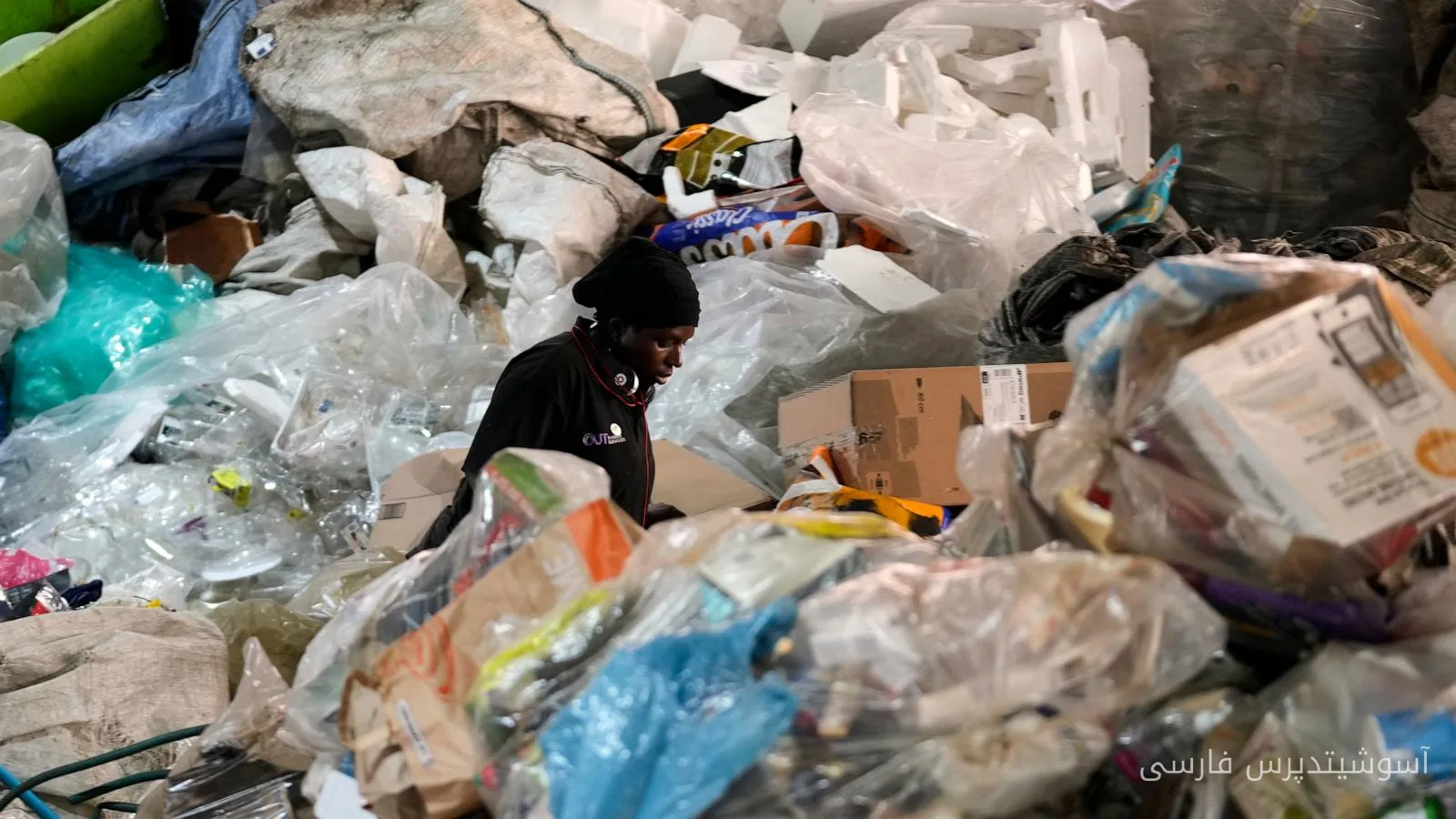
Johannesburg is facing a complex waste crisis exacerbated by irregular collection, rapidly decreasing landfill space, and increasing illegal waste disposal.
Increasing Waste and Decreasing Landfill Space
Two men are sitting on top of a hill in the industrial suburb of Kya Sands, but this hill is not a natural feature; it is a mountain of illegally dumped waste that now covers the road. Diwan Stentkamp, a local council member, said, "When I started as a local councilor in 2021, this mountain was very small. Now it has become a large mountain, and the smell of toxic gases is constant."
Read more: Discovery of Antarctic Corals in Hydrothermal Springs
This hill is just a glimpse of the landfill site that emerged after the municipal landfill closed in 2010. Waste is scattered in the surrounding valleys, and smoke rises from it.
Common Challenges Across the Continent
The waste problem in Johannesburg reflects broader challenges across Africa. Rapidly growing cities like Lagos, Dakar, and Accra produce waste that quickly exceeds the capacity of municipal collection and disposal. The United Nations Environment Programme estimates that over 90% of the waste generated in Africa is disposed of in uncontrolled landfills.
In the Alexandra neighborhood of Johannesburg, residents struggle with household waste scattered on the sidewalks. Linda Makule, a 75-year-old resident, is concerned about the health of children living in one-room homes who need outdoor space to play.
The waste management company Pickitup has identified over 2000 illegal dumping sites and has allocated 115 million rand (6.4 million dollars) for the year 2025/26 to tackle this issue.
Many residents say their waste has remained uncollected for four weeks. The Johannesburg Crisis Coalition attributes these disruptions to labor disputes, financial constraints, and an aging fleet.
One resident, Carmen Jordan, said, "If the municipality does not collect public waste, people are forced to call anyone with a truck to collect the waste."
Dr. Susan Olufose, a senior scientist at the Council for Scientific and Industrial Research of South Africa, warned that poor waste management could increase flood risks as waste can block rainwater drainage and attract vermin.
The South African National Waste Management Strategy warns that landfill space is decreasing at an unbearable rate, and the pressures in Johannesburg are clearly evident.
Olufose added that a recent CSIR study showed that, on average, landfills in Johannesburg have less than a year of disposal capacity left. She said, "If we have a few more years, we will be lucky."
Read more: Reviving Water Supply in the Grand Canyon in a Few Weeks · Trump Administration's $100 Million Aid to American Businesses in Africa to Counter China
Source: abcnews.com