The Trump administration has expressed concerns over the growing dependence on new drugs from China. According to obtained information, the U.S. Department of the Treasury is reviewing new regulations that would allow American pharmaceutical companies to continue investing in innovative drugs from Chinese companies, provided that these drugs are not related to pathogens or biotechnology technology associated with potential weapons.
Licensing Agreements and Their Implications
This approach is much more facilitative compared to the restrictions that some lawmakers and smaller biotechnology companies in the U.S. are calling for. These lawmakers argue that American investment helps China advance rapidly in the competition for dominance in the pharmaceutical industry. The value of licensing agreements with Chinese biotechnology companies reached $115 billion last year, enabling American pharmaceutical companies to acquire new drugs for their production lines and transferring billions of dollars to Chinese companies.
Read more: Russia's war economy faces serious challenges from debt and military spending
Concerns and Opposition
Reports indicate that nearly half of the U.S. pharmaceutical agreements with foreign companies in 2025 involved Chinese companies, a trend that continues this year. Pfizer recently announced a $10.5 billion collaboration with China's Innovent Biologics for 12 cancer treatment programs, while Bristol Myers Squibb signed a $15.2 billion agreement with Jiangsu Hengrui Pharma.
Major pharmaceutical companies are lobbying against strict restrictions. Albert Bourla, CEO of Pfizer, stated that he has discussed China and national security with Scott Basset, the Secretary of the Treasury, Marco Rubio, the Secretary of State, and officials from the Department of Health and Human Services. Bourla emphasized that licensing drugs developed by Chinese companies does not pose a threat to national security.
However, some lawmakers and smaller biotechnology companies are pushing for more restrictions, warning that ongoing investments could strategically tie the U.S. to China for new drugs. Jason Kelly, CEO of Ginkgo Bioworks, stated whether we agree with strategic dependence on China for innovative drugs. Republican and Democratic representatives in Congress, such as John Molinar and Debbie Dingell, are seeking to impose stricter limitations.
Molinar has asked the Treasury Department to use the COINS Act, a national security law from 2025 that limits certain U.S. outbound investments, to restrict pharmaceutical transactions with China. He argued that American capital entering Chinese biotechnology helps Beijing advance rapidly in the pharmaceutical industry's value chain.
Jake Auchincloss, a Democratic representative from Massachusetts whose district includes several life sciences companies, said that efforts to limit China's pharmaceutical industry by restricting American investment are unlikely to succeed. He said, "China is investing $100 billion in biotechnology. China has smart scientists." The Treasury Department and the White House have declined to comment on the proposed regulations.
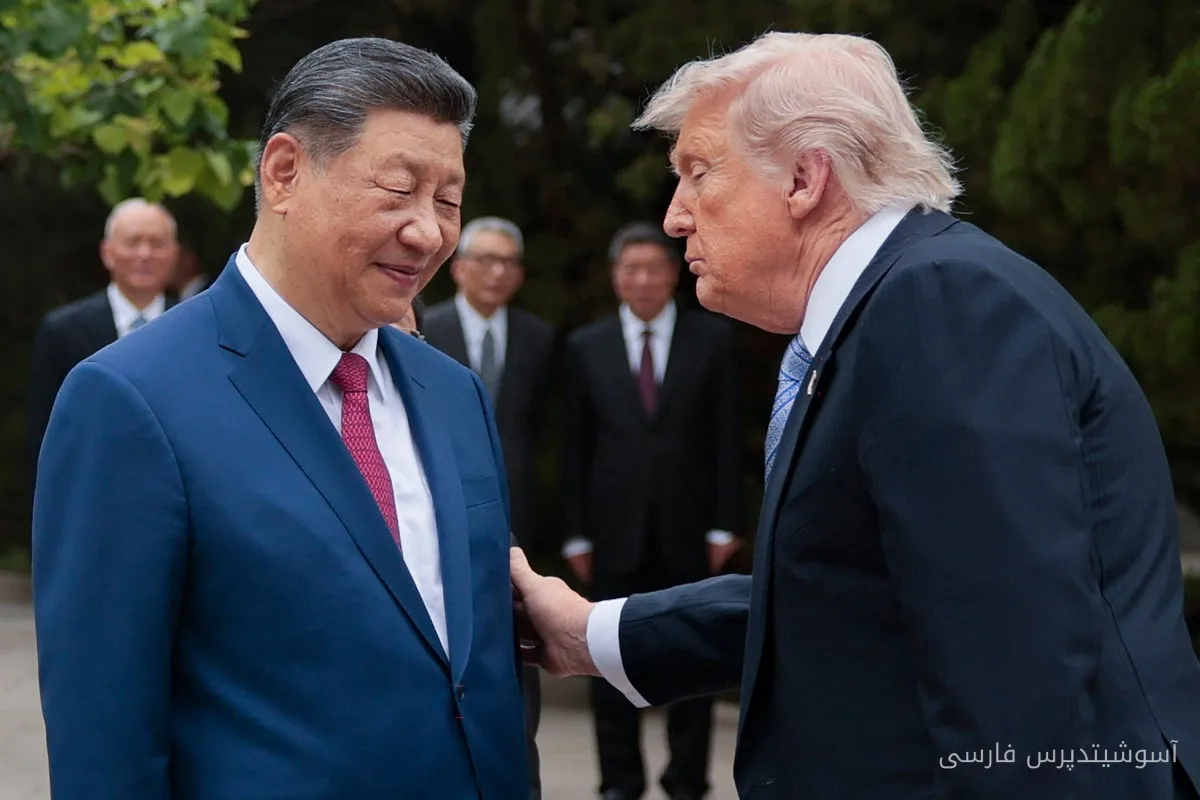
This negotiation comes ahead of the anticipated meeting between Chinese President Xi Jinping and Trump in the United States next week. New pharmaceutical investment regulations are not expected to be unveiled before this meeting.
Read more: The Federal Reserve raises the key interest rate for the first time in 3 years · Powerball winner receives a billion-dollar prize from a two-dollar ticket
Source: independent.co.uk