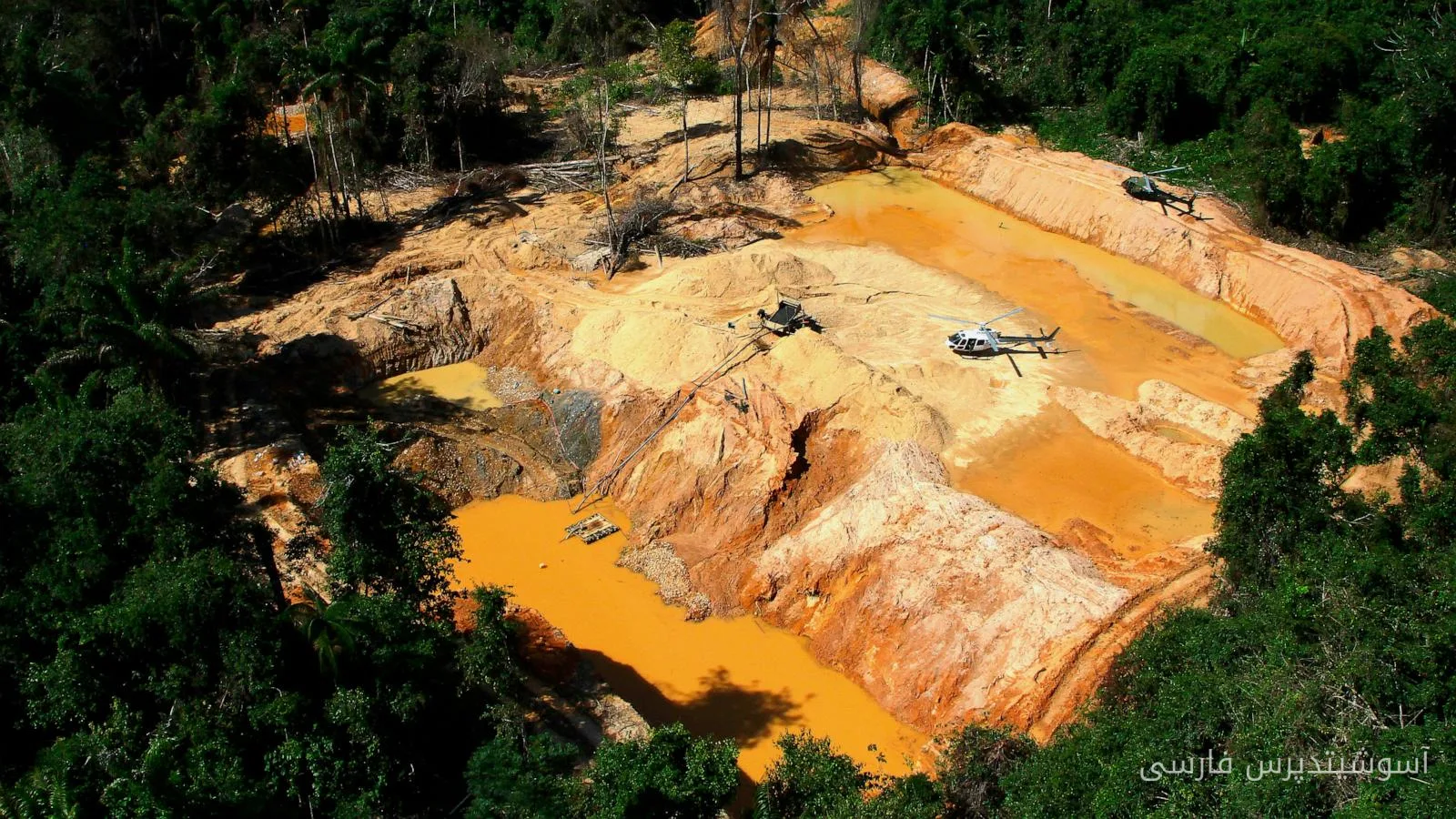
Indigenous lands in the Brazilian Amazon are facing the greatest threat from the expansion of gold mining. A new analysis published on Tuesday by the Amazon Environmental Research Institute shows that the area affected by gold mining in the Amazon has increased 20-fold from 1985 to 2024.
Rapid Expansion in Indigenous Lands
This growth in indigenous lands has been even greater, with the area affected by gold mining in these regions increasing 24-fold, and nearly seven times in the period from 2016 to 2024. The unprecedented rise in gold prices, driven by investor demand for safe assets in a risky global environment, has sparked a new wave of gold extraction in the Amazon.
Read more: A Disturbing Prelude: Marine Disaster in California with Increasing Seal Diseases
Environmental and Health Consequences
This expansion has significant negative impacts on deforestation and mercury pollution in local and indigenous communities. The Amazon Environmental Research Institute stated that these activities exacerbate existing climate risks for indigenous communities, as climate change driven by human activities has intensified droughts and heat in the Amazon.
The institute said: "Severe weather events threaten access to water, food, transportation, and health services. At the same time, the expansion of illegal mining pollutes rivers, accelerates environmental degradation, and increases health problems and violence, undermining the ability of indigenous communities to adapt."
Nearly 90 percent of the affected area is concentrated in three territories. One of these territories is the Munduruku indigenous land located in the state of Pará.
Earlier this month, representatives from the International Human Rights Court visited the state of Pará to meet with the Munduruku people. This visit aimed to assess Brazil's compliance with the interim measures recommended by the court in 2022 to protect the rights of indigenous communities.
Munduruku leaders presented evidence including satellite images and field reports showing that illegal miners returned to their land after federal operations in 2024 and 2025. They also reported health impacts including increased cases of malaria, higher infant mortality rates, and mercury pollution linked to delays in children's language and motor development.
Under the leadership of Luiz Inácio Lula da Silva, Brazilian officials have intensified their efforts to combat illegal mining. Police and environmental organizations have conducted large-scale operations against criminal networks, while researchers are increasingly using forensic science to trace gold and identify illegally extracted metals.
However, law enforcement has not been able to eliminate illegal mining across the Amazon. When officials destroy mining equipment in one area, miners often move to other regions or resume operations after officials leave. In the Munduruku territory, indigenous observers identified 10 new illegal mining sites by August.
In a statement released on September 10, the Brazilian Ministry of Human Rights announced that government officials attended meetings to discuss the continued enforcement of territorial laws and improvements in water supply and food safety. The ministry also acknowledged the need for a "more precise technical response" to mercury pollution.
Under Brazilian law, mining on indigenous lands is prohibited. On Monday, the Articulation of Indigenous Peoples of Brazil (Apib) stated in a statement that protecting the Munduruku land requires further action beyond expelling invaders.
The organization stated: "This activity is part of a transnational criminal economy controlled by armed groups that move gold and drugs through the same waterways, and mining permits are used as a cover for illegally extracted gold."
Read more: The Environmental Protection Agency Lifted Pollution Restrictions on Fossil Fuel Power Plants · Democrats Shift Their Approach on Trans Issues
Source: abcnews.com