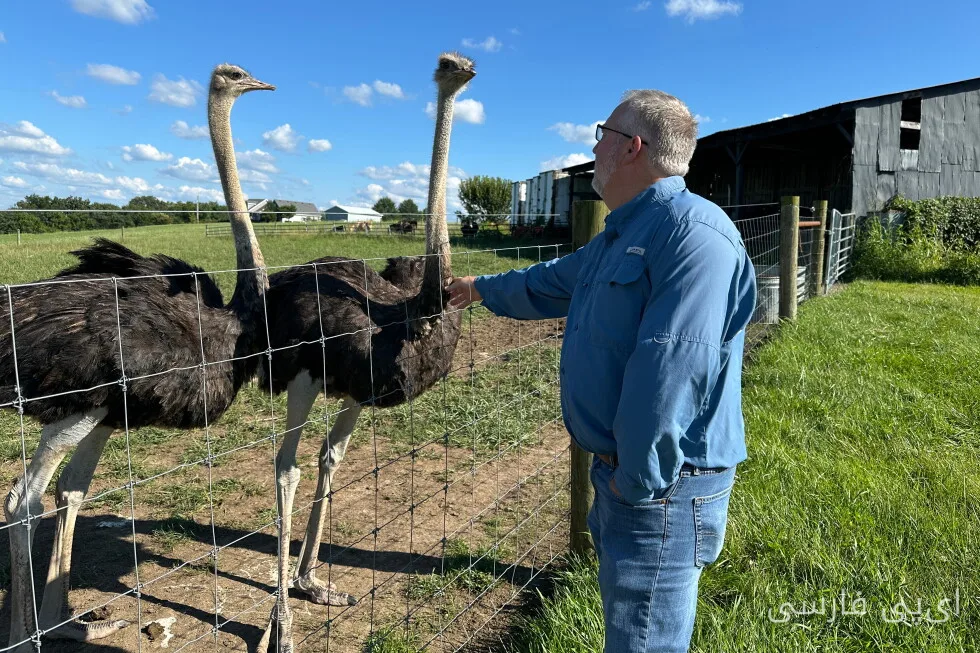
In the strange world of today's foods, sometimes a seemingly simple problem can lead to a major change in life. A man from the state of Kentucky decided to raise ostriches due to an allergy to red meat, which doctors say is caused by tick bites. This decision not only kept him away from consuming red meat but also directed him into the world of ostrich farming and a new market of customers.
Combination of Health and Business
Allergy to red meat is increasingly on the rise, and for this reason, ostrich farmers in America are attracting customers looking for alternatives to animal proteins. This situation is considered a golden opportunity for farmers operating in this industry. Ostrich products have quickly gained popularity among those seeking healthier options due to their low-fat content and high nutritional value.
This Kentucky man, by establishing an ostrich farm, was not only looking to solve his personal problem but also sparked a new wave in the agricultural industry. He says, "I have always been looking for a way to enjoy foods, but I couldn't simply use red meat. Now with ostrich, I can not only enjoy the delicious taste of the meat but also protect my health." This kind of thinking can be seen as a key to success in modern agriculture.
Challenges and Opportunities
However, raising ostriches also has its specific challenges. The need for initial investment, special care, and marketing of products are among the barriers facing new farmers. But given the increasing public awareness of food allergies and their desire to choose healthier foods, these challenges can turn into new opportunities.
Ultimately, the story of this Kentucky man is not just a tale of a career change but reflects deeper changes in people's attitudes toward food and health. It seems that such initiatives could be a novel way to address public health issues and create a new market in agriculture.